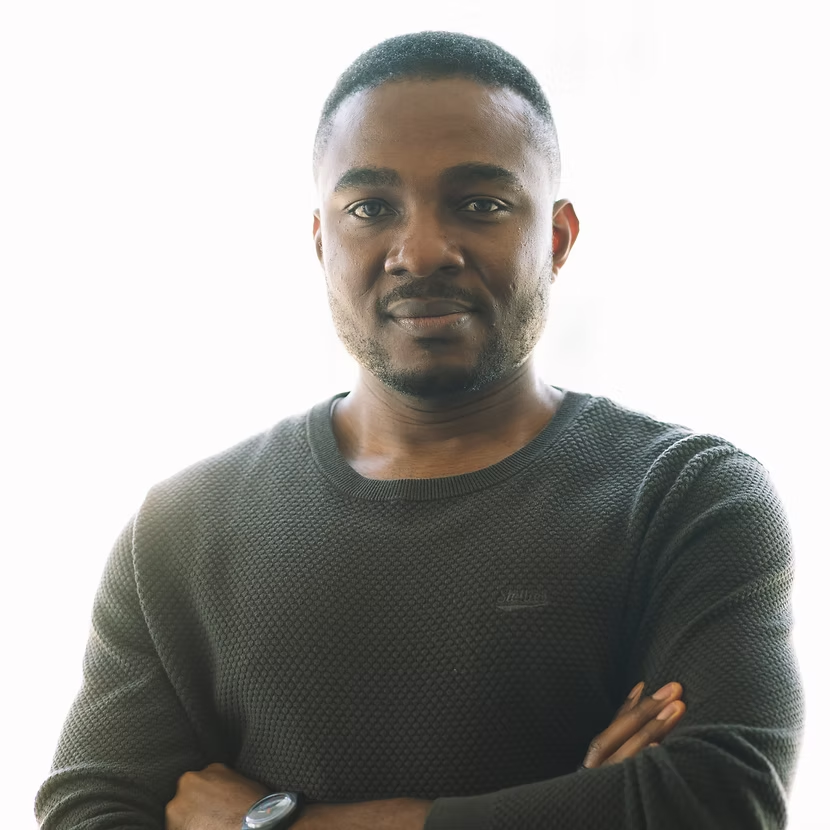

Edmund Ugar
Speaker at AMLD Africa 2026
Dr Edmund Terem Ugar is an AI ethics and governance expert, specialising in ethical design, deployment, and governance of AI systems in healthcare (public health and mental health). I hold a PhD (by publication) from the University of Johannesburg, where my research addresses algorithmic bias, discrimination, patient moral agency, and data ethics. My work advances Afro-relational ethics as a human-centred, context-sensitive framework that guides responsible AI innovation in African and global healthcare systems. Dr Ugar's areas of expertise include responsible AI & governance in healthcare, Algorithmic bias, fairness, and discrimination; data ethics & value-sensitive design; technology transfer & value colonialism; sociotechnical impacts of AI in African contexts; digital mental health interventions; and cultural, sustainable innovations in Africa. I have published peer-reviewed articles and policy papers, received competitive scholarships, and presented at international conferences.
Beyond research, Dr Ugar engages in global policy and industry conversations to ensure AI is ethical, equitable, and culturally sustainable.
At AMLD Africa
WITS University, Johannesburg, South Africa
Whose Values Travel with Technology? Disruption, Power, Cultural and Democratic Sustainability in Africa
My talk is a philosophical investigation of how technology transfer impacts cultures, values, and democratic systems in sub-Saharan Africa. Digital technologies such as artificial intelligence (AI), machine learning (ML), and social robots have become pervasive, reshaping our perceptions of the world, as well as our societal norms and cultural values. In the field of medicine, for example, diagnostic technologies constantly redefine doctor-patient relationships and influence medical decision-making (Ugar, 2025). These technologies are, in Hopster’s words, “socially disruptive” because they challenge our traditional norms and alter our engagement with our environment and those around us (Hopster, 2021:2-3. Cf. Ugar, 2023). The primary reason for the above is that technologies are never value-neutral, most especially since they establish power relations within specific environments. They carry properties that are inseparably linked to the institutionalised patterns of power and authority in which they originated. What is of significance is that, as technologies are transferred from place to place, the embedded cultural values and norms are also transferred. As Ihde (1993) puts it, technology transfer involves the introduction of material artefacts from their original cultural context into another. In Africa, the adoption of new technologies, most often from the global North, a process that can have significant consequences for aspects of culture, values, and political systems. I will do the following: Firstly, I will outline the concept of technology transfer and its implications. Second, I will demonstrate how technology transfer can lead to disruptive events in sub-Saharan Africa. Third, I will emphasise that technology transfer is often accompanied by an underlying cosmopolitan agenda and illustrate the implications of this agenda in sub-Saharan Africa. Finally, I will propose what I call “a culturally sustainable digital innovation” in Africa.
AI Panel with Samuel Segun, Edmund Ugar, Paige Benton an Martin Bekker
AI Ethics Beyond the Global North: African Priorities and Perspectives